
Whilst acknowledging that climate change remains one of our most urgent current challenges, the science of predicting how the Earth will respond to our ever-worsening levels of atmospheric CO₂ relies heavily on our understanding of the past.
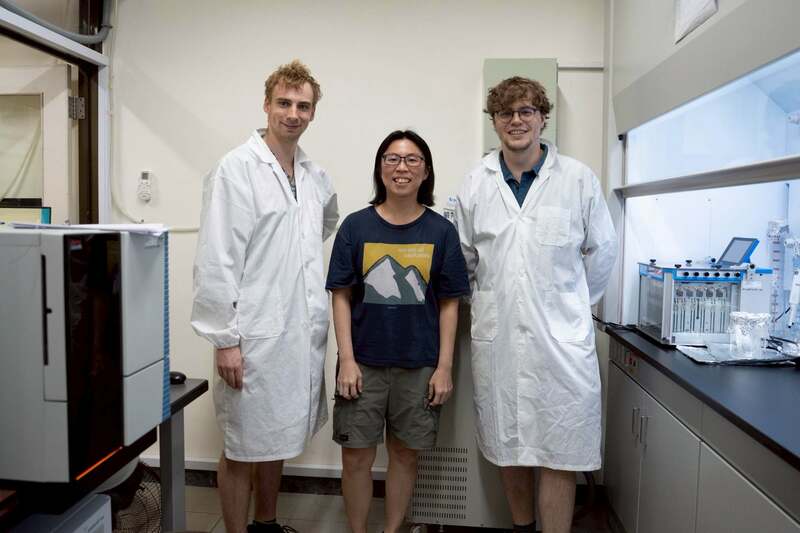
At National Taiwan University, the IONTU PaleoProxy Lab, led by Associate Professor Sze Ling Ho, is uncovering vital clues about Earth’s climate history by studying sediments gathered from ocean floors across the globe. Their work is helping to refine how we reconstruct past ocean temperatures, which are critical benchmarks for testing the climate models that forecast our planet’s future.
Crossing Continents, Charting Climates: Professor Ho’s Path to NTU
Professor Ho's academic journey is as global as her research. Originally from Malaysia, she studied chemical engineering at Universiti Teknologi Malaysia before shifting to environmental science at Hokkaido University in Japan. She then specialized in marine paleoclimate research at the Alfred Wegener Institute (AWI), part of the Helmholtz Centre for Polar and Marine Research in Germany, and at the University of Bergen in Norway. In 2018, she joined NTU's Institute of Oceanography, bringing a distinctive mix of expertise to investigate the ocean’s long-term history.
Her lab investigates how the Earth’s climate evolved over geological time scales—especially during the Pliocene (about 3 million years ago, when atmospheric CO₂ levels were comparable to those projected for the end of this century due to human-driven emissions) and the last glacial cycle (spanning the last 25,000 years). Using sediment cores—long tubes of mud extracted from the ocean floor—Prof. Ho and her team can piece together how sea surface temperatures and oceanic conditions changed through time.
Prof. Ho explains that by analysing chemical signatures preserved in the mud, we can estimate what the ocean temperatures were millions of years ago.

The lab analyses multiple indicators, known as ‘proxies’, to build reconstructions of past environments. For example, they examine diverse microfossils under microscopes, trace molecular biomarkers such as waxy residues from ancient plants blown into the ocean and measure chemical compounds that are sensitive to water temperatures. By considering these independent indicators in combination, the lab can refine the accuracy of reconstructions of past oceans and climate.

Meticulousness and cross-checking are hallmarks of the lab’s philosophy. Traditionally, many studies would analyse a single ‘proxy’ and build a narrative around it, but Prof. Ho wants to be more thorough than that. The team challenges the accuracy of data through studies that use multiple types of evidence, and repeated localised tests. Recently, the lab revealed that although different proxies can validate long-term climate trends, these same proxies may not substantiate shorter term fluctuations. These findings, published in Progress in Earth and Planetary Science, underline the need for reflection and repeated testing to improve climate reconstructions.

Technological Reach: Local Relevance & Global Connections
The IONTU PaleoProxy Lab stands out not just for its meticulous approach, but also for leveraging Taiwan’s marine research capabilities. In a collaborative project using Taiwan’s advanced oceanographic vessels and remotely operated vehicles (ROVs), the lab demonstrated that a widely used temperature proxy – or paleothermometer - remains reliable even in methane-rich sediments off Taiwan’s southwest coast. This work was featured in one of the field’s most prestigious journals, Geochimica et Cosmochimica Acta, underscoring the technical maturity of Taiwan’s marine science community.
While marine science has long been a prominent and respected field in Taiwan, paleoceanography is relatively new, and the lab is rapidly raising NTU’s international profile in this area. It collaborates with a wide network of institutions in Japan, France, Germany, and many other countries (see more about its partners here). Together, they conduct multi-country expeditions, share laboratory facilities, hold regular virtual meetings, and co-supervise PhD students—activities that both deepen the science and help limit carbon footprints.
This collaborative spirit is also visible in the lab’s diverse staffing with recent members hailing from Malaysia, India, France, Chile, Germany, Spain, Canada, Portugal, Turkey, and Taiwan. Collaborations with overseas universities and funding organisations, such as German Academic Exchange Service DAAD and Taiwanese International Internship Pilot Program, bring in interns each summer, adding new perspectives and further strengthening global ties.
Climate Futures & Looking Ahead
Ranked among the world’s top universities for its commitment to the United Nations Sustainable Development Goals (SDGs), NTU pursues high-impact research that addresses urgent planetary challenges, fosters international collaboration, and cultivates the next generation of scientists equipped to navigate complex environmental issues.
.jpg)
This commitment was recently recognised in the 2025 Times Higher Education University Impact Rankings, where NTU placed 14th globally and secured top-20 rankings in multiple SDGs, including 2nd in Good Health and Well-being, 9th in Life Below Water, and 12th in Peace, Justice and Strong Institutions. NTU also rose to 74th globally in the QS Sustainability Rankings 2025, ranking fourth in Asia.
The work of the IONTU PaleoProxy Lab exemplifies this mission. By reconstructing past ocean temperatures and other important conditions—whether biochemical or geological—the lab is generating critical benchmarks that are refining climate models essential for shaping effective climate strategies, thus contributing to SDG 13 (Climate Action) and SDG 14 (Life Below Water).
Prof. Ho hopes their meticulous and interdisciplinary approach will inspire more researchers to prioritize careful reconstructions with meaningful uncertainty estimates, which will in turn strengthen how paleo data are used to validate climate models. ‘We want to encourage a shift toward more robust, reproducible reconstructions. That’s how we can truly improve predictions for the future’.
Asked what message she would send to the international community, Prof. Ho smiles: ‘Come join us—let’s make this a better place together’.
The Office of International Affairs would like to thank Prof. Sze Ling Ho, all colleagues from the IONTU PaleoProxy Lab.
Written by: Andrew Griff-Owen.
Photographs by: Shota Ambiru, Krystal Chen & IONTU PaleoProxy Lab.