

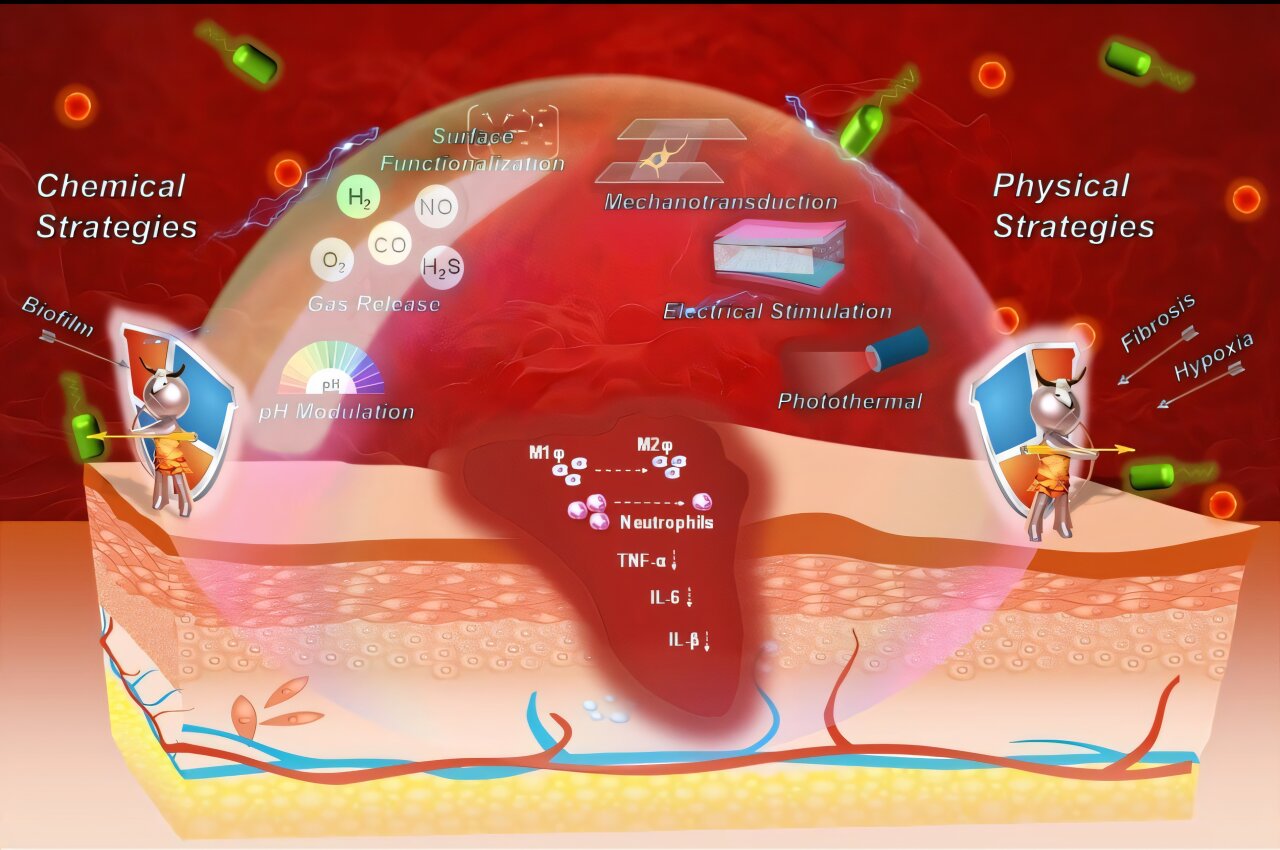
Researchers at National Taiwan University have discovered how light, electricity, and tiny forces can work together to help wounds heal naturally and leave fewer scars, offering new hope for chronic wound care.
Chronic wounds such as diabetic ulcers and pressure sores affect millions of people worldwide and remain one of the most challenging medical problems. These wounds often fail to heal due to persistent inflammation, bacterial infection, and poor blood circulation. Current treatments—like dressings or topical drugs—can protect the wound but rarely restart the body's natural healing process.
To address this issue, researchers from National Taiwan University, led by Prof. Zong-Hong Lin, reviewed the latest advances in how physical and chemical methods can work together to heal skin injuries faster and with fewer scars. Instead of relying on a single drug or therapy, their work shows that combining multiple gentle cues—such as electricity, light, pH control, and therapeutic gases—can stimulate the skin's own repair system. The study is published in Materials Today.
For example, electrical stimulation can guide cell movement and tissue regrowth, while photothermal therapy uses light-induced warmth to kill bacteria and support collagen formation. In parallel, gases like nitric oxide, carbon monoxide, and hydrogen sulfide play signaling roles that regulate inflammation and promote the growth of new blood vessels. When these methods are carefully integrated, they create a healing environment that mimics the body's natural regeneration process.
This comprehensive approach not only offers new directions for chronic wound management but also opens possibilities for wearable smart dressings that can deliver controlled physical and chemical stimulation. These innovations could one day transform wound care from passive protection to active regeneration.
"By combining different healing strategies into one coordinated system, we aim to help the body heal itself more effectively and with less scarring," says Zong-Hong Lin, Ph.D., professor of biomedical engineering and corresponding author of the study.
To see article on Medical Xpress: https://medicalxpress.com/news/2025-11-generation-wound-body.html